
Recommended Global Medical Webinars & Conferences
Asia Pacific & Middle East
TRANSLATIONALMEDICINE 2027
- Welcome Message
- About TRANSLATIONALMEDICINE 2026
- Why Attend?
- Target Audience
- Scientific Sessions and Tracks
- Market Analysis Report
- Past Conference Report
Welcome Message
Dear Esteemed Colleagues, Researchers, Clinicians, and Industry Partners,
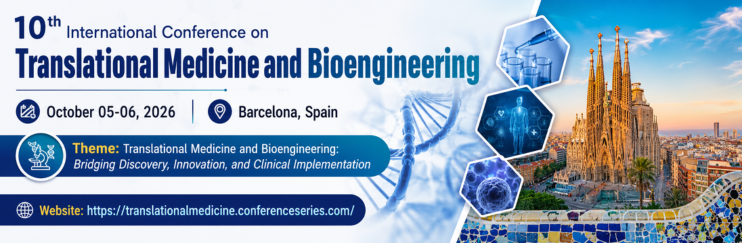
It is with great pleasure that we welcome you to the 10th International Conference on Translational Medicine and Bioengineering, taking place on October 05–06, 2026, in the vibrant city of Barcelona, Spain.
This milestone conference brings together leading scientists, healthcare professionals, bioengineers, innovators, and policymakers from around the world to explore the latest advancements in Translational Medicine and Bioengineering under the theme:
“Translational Medicine and Bioengineering: Bridging Discovery, Innovation, and Clinical Implementation.”
As we celebrate the 10th edition of this prestigious event, we recognize the remarkable progress achieved in transforming scientific discoveries into practical healthcare solutions that improve patient outcomes and global well-being. The conference serves as a dynamic platform for interdisciplinary collaboration, fostering discussions on emerging technologies, precision medicine, biomedical engineering, regenerative therapies, diagnostics, artificial intelligence in healthcare, and innovative clinical applications.
Over the course of two inspiring days, participants will have the opportunity to engage with distinguished keynote speakers, insightful panel discussions, technical sessions, poster presentations, and networking activities designed to encourage knowledge exchange and future collaborations.
We are confident that your participation will contribute significantly to the success of the conference and inspire new ideas that will shape the future of medicine and healthcare innovation.
We warmly welcome you to Barcelona and look forward to an intellectually enriching and memorable experience at the 10th International Conference on Translational Medicine and Bioengineering.
With best regards,
Organizing Committee
10th International Conference on Translational Medicine and Bioengineering
October 05–06, 2026 | Barcelona, Spain
About TRANSLATIONALMEDICINE 2026
TRANSLATIONALMEDICINE 2026 is an international scientific conference dedicated to advancing the field of translational medicine by bringing together researchers, clinicians, healthcare professionals, academicians, biotechnology experts, pharmaceutical leaders, and policymakers from across the globe.
The conference focuses on bridging the gap between basic scientific discoveries and their practical application in clinical practice and public health. It provides a collaborative platform for sharing innovative research, emerging technologies, clinical advancements, and interdisciplinary approaches that contribute to improved patient outcomes and precision healthcare.
The scientific program of TRANSLATIONALMEDICINE 2026 includes keynote lectures, plenary talks, panel discussions, oral and poster presentations, workshops, and networking sessions covering a broad range of topics such as:
- Precision and personalized medicine
- Clinical and translational research
- Genomics and proteomics
- Biomarkers and diagnostics
- Drug discovery and development
- Regenerative medicine and stem cell therapy
- Artificial intelligence in healthcare
- Immunotherapy and cancer research
- Public health and healthcare innovation
- Translational approaches in infectious and chronic diseases
The conference aims to encourage interdisciplinary collaboration, foster academic and industrial partnerships, and promote the translation of scientific discoveries into effective therapies, diagnostics, and healthcare solutions.
TRANSLATIONALMEDICINE 2026 offers participants an excellent opportunity to exchange knowledge, present groundbreaking research, build professional networks, and explore future directions in translational medicine and biomedical sciences.
Why Attend?
Attending the 10th International Conference on Translational Medicine and Bioengineering offers a valuable opportunity to gain insights into the latest scientific innovations and emerging healthcare technologies shaping the future of medicine.
Key Reasons to Attend
-
Learn from Global Experts
Meet internationally recognized researchers, clinicians, biomedical engineers, and healthcare innovators sharing their latest discoveries and clinical experiences. -
Explore Emerging Technologies
Discover advances in translational medicine, regenerative therapies, artificial intelligence in healthcare, biomedical devices, nanotechnology, and personalized medicine. -
Present Your Research
Showcase your scientific work through oral or poster presentations and receive feedback from leading professionals and peers. -
Expand Professional Network
Connect with academicians, industry leaders, healthcare professionals, and researchers from different countries to build future collaborations and partnerships. -
Gain Clinical and Research Insights
Understand how scientific discoveries are translated into real-world clinical applications to improve patient care and healthcare outcomes. -
Enhance Career Opportunities
Young researchers, students, and early-career professionals can benefit from mentorship, networking, and exposure to international scientific communities. -
Industry and Innovation Exposure
Interact with biotechnology companies, medical device manufacturers, and healthcare organizations presenting innovative products and solutions. -
Publication and Recognition Opportunities
Selected abstracts and presentations may receive publication opportunities, awards, and recognition from the scientific community. -
Experience Barcelona, Spain
Enjoy one of Europe’s leading scientific and cultural destinations while participating in a high-quality international conference environment.
The conference serves as an excellent platform to exchange knowledge, discuss future challenges, and contribute to advancements in translational medicine and bioengineering.
Target Audience
The 10th International Conference on Translational Medicine and Bioengineering is designed for a diverse audience of professionals, researchers, and industry experts involved in healthcare innovation, biomedical sciences, and clinical research.
Who Should Attend?
- Translational Medicine Researchers
- Biomedical Engineers
- Clinical Researchers and Scientists
- Physicians and Healthcare Professionals
- Biotechnologists and Microbiologists
- Pharmacologists and Drug Development Experts
- Medical Device and Diagnostic Professionals
- Regenerative Medicine Specialists
- AI and Digital Health Researchers
- Genomics and Precision Medicine Experts
- Academicians and University Faculty
- Laboratory and Clinical Technicians
- Public Health Professionals
- Healthcare Industry Representatives
- Pharmaceutical and Biotechnology Companies
- Policy Makers and Healthcare Administrators
- Students, Postdoctoral Fellows, and Young Researchers
- Investors and Innovation Leaders in Healthcare Technology
The conference provides an interdisciplinary platform for participants from academia, research institutions, hospitals, healthcare industries, and government organizations to exchange ideas, collaborate on innovative projects, and explore future advancements in translational medicine and bioengineering.
Scientific Sessions and Tracks
Session 01: Translational Medicine and Precision Healthcare
Translational Medicine and Precision Healthcare focus on transforming scientific discoveries into practical clinical applications that improve patient care and healthcare outcomes. This session highlights recent advancements in genomics, molecular diagnostics, biomarker discovery, personalized therapeutics, pharmacogenomics, artificial intelligence, and digital health technologies that are reshaping modern medicine. The integration of translational research with precision healthcare enables clinicians and researchers to develop targeted treatment strategies based on individual patient characteristics, improving disease prevention, diagnosis, and therapy. The session will provide an interdisciplinary platform for researchers, clinicians, biomedical engineers, pharmaceutical scientists, healthcare innovators, and industry professionals to discuss emerging technologies, translational research methodologies, clinical trial innovations, and advanced biomedical solutions. Key areas of discussion include regenerative medicine, nanomedicine, wearable biosensors, bioinformatics, advanced imaging systems, targeted drug delivery, and AI-driven healthcare systems. Participants will also explore challenges related to regulatory approval, clinical validation, data integration, and commercialization of precision healthcare technologies. This session encourages collaboration between academia, healthcare institutions, biotechnology companies, and research organizations to accelerate the development of innovative diagnostic tools and patient-centered therapies. By promoting scientific exchange and interdisciplinary partnerships, the session aims to contribute to the advancement of translational medicine and precision healthcare worldwide while supporting the future of personalized and technology-driven medical solutions.
Session 02: Biomedical Engineering and Healthcare Technologies
Biomedical Engineering and Healthcare Technologies play a vital role in advancing modern healthcare systems through the development of innovative medical devices, diagnostic tools, imaging systems, and smart healthcare solutions. This session focuses on the integration of engineering principles with medical and biological sciences to improve disease diagnosis, treatment, rehabilitation, and patient monitoring. Rapid advancements in biomedical engineering are transforming healthcare delivery through technologies such as artificial intelligence, robotics, wearable devices, biosensors, telemedicine, tissue engineering, and smart medical equipment. The session will provide a platform for researchers, engineers, clinicians, healthcare professionals, and industry experts to discuss recent innovations, research findings, and technological developments that support clinical implementation and patient-centered care. Key topics include biomedical instrumentation, medical imaging technologies, bioelectronics, healthcare robotics, digital therapeutics, implantable devices, biomaterials, rehabilitation engineering, computational modeling, and AI-driven healthcare systems. Participants will also explore emerging trends in personalized healthcare technologies, remote patient monitoring, regenerative medicine applications, and advanced diagnostic platforms. Discussions will address challenges related to device safety, regulatory standards, data security, clinical validation, and commercialization of healthcare technologies. This session encourages interdisciplinary collaboration between academia, hospitals, research institutions, and healthcare industries to accelerate innovation and improve healthcare accessibility and efficiency worldwide. By promoting technological advancement and translational engineering solutions, the session aims to contribute to the future development of intelligent, efficient, and patient-focused healthcare systems.
Session 03: Regenerative Medicine and Tissue Engineering
Regenerative Medicine and Tissue Engineering are rapidly emerging fields focused on repairing, replacing, and regenerating damaged tissues and organs using advanced biological and engineering approaches. This session will explore recent innovations in stem cell therapy, biomaterials, tissue scaffolding, organ regeneration, 3D bioprinting, and cellular engineering that are transforming the future of healthcare and clinical treatment. Researchers and healthcare professionals are increasingly utilizing regenerative technologies to develop personalized therapies for chronic diseases, neurological disorders, orthopedic injuries, cardiovascular conditions, and organ failure. The session provides an interdisciplinary platform for scientists, clinicians, biomedical engineers, biotechnology experts, and healthcare innovators to discuss cutting-edge research, translational applications, and clinical advancements in regenerative medicine. Key topics include stem cell biology, tissue fabrication, biomaterial development, regenerative therapeutics, wound healing technologies, gene and cell therapies, artificial organs, nanobiotechnology, and bioengineered medical solutions. Discussions will also address challenges related to ethical considerations, regulatory approval, clinical safety, scalability, and commercialization of regenerative therapies. Participants will gain insights into the integration of bioengineering techniques with translational medicine to accelerate the development of innovative treatment strategies and improve patient outcomes. This session encourages scientific collaboration between academia, healthcare institutions, pharmaceutical industries, and biotechnology companies to advance regenerative healthcare technologies and support the future of personalized and restorative medicine worldwide.
Session 04: Artificial Intelligence and Digital Health in Medicine
Artificial Intelligence and Digital Health are transforming modern healthcare by improving clinical decision-making, disease diagnosis, patient monitoring, and healthcare management systems. This session focuses on the integration of AI technologies, machine learning, big data analytics, telemedicine, and digital healthcare platforms to enhance medical research, clinical practice, and patient-centered care. The rapid growth of intelligent healthcare technologies is enabling healthcare professionals to develop predictive models, automated diagnostic systems, precision treatment strategies, and real-time patient monitoring solutions. This session provides a multidisciplinary platform for researchers, clinicians, biomedical engineers, data scientists, healthcare innovators, and industry experts to discuss recent advancements and practical applications of AI-driven healthcare technologies. Key topics include medical imaging and diagnostics, healthcare data analytics, wearable health devices, virtual healthcare systems, robotic surgery, electronic health records, digital therapeutics, smart hospital technologies, cybersecurity in healthcare, and AI-assisted clinical workflows. Participants will also explore the role of artificial intelligence in precision medicine, drug discovery, disease prediction, and remote healthcare accessibility. Discussions will address challenges related to data privacy, ethical considerations, regulatory frameworks, algorithm validation, and implementation of digital health technologies in clinical environments. This session encourages collaboration between academia, healthcare organizations, technology companies, and research institutions to accelerate innovation and improve healthcare efficiency, accessibility, and patient outcomes worldwide. By promoting advanced digital healthcare solutions and intelligent medical systems, the session aims to contribute to the future development of smarter, safer, and more connected healthcare environments.
Session 05: Clinical Research and Translational Therapeutics
Clinical Research and Translational Therapeutics play a critical role in advancing modern medicine by transforming scientific discoveries into safe, effective, and patient-centered treatments. This session focuses on innovative approaches in clinical trials, drug discovery, therapeutic development, precision therapeutics, and translational research that accelerate the transition of laboratory findings into clinical practice. The session will highlight recent advancements in targeted therapies, immunotherapy, biologics, molecular medicine, pharmacology, and personalized treatment strategies aimed at improving patient outcomes across various medical specialties. Researchers, clinicians, pharmaceutical experts, biomedical scientists, and healthcare professionals will have the opportunity to discuss emerging trends, innovative methodologies, and challenges in clinical and translational medicine. Key topics include clinical trial design, translational pharmacology, therapeutic biomarkers, precision drug development, patient-centered research, evidence-based medicine, regulatory science, vaccine development, advanced therapeutics, and real-world clinical applications. Participants will also explore the role of artificial intelligence, big data analytics, and digital technologies in enhancing clinical research efficiency and therapeutic innovation. Discussions will address ethical considerations, regulatory approval processes, patient safety, and global collaboration in clinical research. This session encourages interdisciplinary partnerships between academia, hospitals, pharmaceutical industries, biotechnology companies, and healthcare organizations to accelerate therapeutic innovation and improve healthcare delivery worldwide. By promoting translational research and advanced therapeutic strategies, the session aims to contribute to the development of more effective, accessible, and personalized medical treatments for future healthcare systems.
Session 06: Nanomedicine and Advanced Drug Delivery Systems
Nanomedicine and Advanced Drug Delivery Systems are revolutionizing modern healthcare by enabling precise, targeted, and efficient therapeutic interventions for a wide range of diseases. This session focuses on the application of nanotechnology in medicine, including nanoparticle-based therapies, smart drug delivery platforms, nanodiagnostics, and nano-engineered biomedical systems designed to improve treatment effectiveness and reduce side effects. Rapid advancements in nanomedicine are transforming the management of cancer, cardiovascular disorders, neurological diseases, infectious diseases, and chronic health conditions through controlled and site-specific drug delivery approaches. The session provides an interdisciplinary platform for researchers, clinicians, pharmaceutical scientists, biomedical engineers, and healthcare innovators to discuss recent developments, translational applications, and clinical advancements in nanotechnology-based healthcare solutions. Key topics include nanocarriers, liposomes, polymeric nanoparticles, targeted therapeutics, biosensors, nanobiotechnology, biomaterials, precision drug delivery, molecular imaging, and theranostics. Participants will also explore the role of artificial intelligence and bioengineering in designing next-generation nanomedicine systems and personalized therapeutic platforms. Discussions will address challenges related to toxicity, biocompatibility, regulatory approval, manufacturing scalability, and commercialization of nanomedical products. This session encourages collaboration between academia, research institutions, pharmaceutical industries, and biotechnology companies to accelerate innovation and clinical implementation of advanced drug delivery technologies. By promoting scientific exchange and translational nanomedicine research, the session aims to contribute to the future development of safer, smarter, and more effective therapeutic solutions for global healthcare advancement.
Session 07: Genomics, Molecular Medicine, and Personalized Healthcare
Genomics, Molecular Medicine, and Personalized Healthcare are transforming the future of medical science by enabling precise diagnosis, targeted therapies, and individualized treatment strategies based on genetic and molecular profiles. This session focuses on recent advancements in genomic technologies, molecular diagnostics, precision therapeutics, and personalized healthcare approaches that are improving disease prevention, early detection, and patient outcomes. The integration of genomics with translational medicine has accelerated the understanding of complex diseases, including cancer, neurological disorders, cardiovascular diseases, and rare genetic conditions. This session provides a comprehensive platform for researchers, clinicians, geneticists, molecular biologists, biomedical engineers, pharmaceutical experts, and healthcare professionals to discuss emerging innovations and translational applications in molecular medicine. Key topics include next-generation sequencing, gene editing technologies, pharmacogenomics, biomarker discovery, molecular imaging, precision oncology, epigenetics, bioinformatics, companion diagnostics, and targeted therapeutics. Participants will also explore the role of artificial intelligence and big data analytics in genomic research, predictive medicine, and personalized treatment planning. Discussions will address ethical considerations, genetic data privacy, clinical implementation challenges, regulatory standards, and commercialization of genomic healthcare technologies. This session encourages interdisciplinary collaboration between academic institutions, healthcare organizations, biotechnology companies, and research laboratories to accelerate innovation and clinical translation in personalized medicine. By promoting scientific exchange and advanced genomic research, the session aims to contribute to the development of more accurate, efficient, and patient-centered healthcare solutions for the future of global medicine.
Session 08: Biotechnology and Biomedical Innovations
Biotechnology and Biomedical Innovations are driving significant advancements in healthcare, pharmaceuticals, diagnostics, and medical research by integrating biological sciences with cutting-edge technologies. This session focuses on emerging biotechnological approaches and biomedical innovations that are transforming disease diagnosis, therapeutic development, regenerative medicine, and healthcare delivery systems. Rapid progress in biotechnology has enabled the development of advanced biologics, molecular diagnostics, bioengineered products, biosensors, gene therapies, and innovative medical technologies that improve patient care and clinical outcomes. The session provides a multidisciplinary platform for researchers, clinicians, biotechnologists, biomedical engineers, pharmaceutical professionals, and healthcare innovators to discuss recent scientific breakthroughs, translational applications, and future trends in biotechnology and biomedical sciences. Key topics include genetic engineering, synthetic biology, molecular biotechnology, vaccine development, biomaterials, medical biotechnology, bioinformatics, biopharmaceutical production, tissue engineering, and innovative diagnostic technologies. Participants will also explore the role of artificial intelligence, nanotechnology, and computational biology in accelerating biomedical research and therapeutic innovation. Discussions will address regulatory challenges, ethical considerations, commercialization strategies, and global healthcare applications of biotechnology-driven medical solutions. This session encourages collaboration between academia, healthcare institutions, biotechnology industries, pharmaceutical companies, and research organizations to promote innovation and translational research in biomedical sciences. By fostering scientific exchange and interdisciplinary partnerships, the session aims to support the development of advanced healthcare technologies and sustainable biomedical solutions that improve global health and clinical practice.
Session 09: Medical Devices, Diagnostics, and Healthcare Innovation
Medical Devices, Diagnostics, and Healthcare Innovation are essential components of modern healthcare systems, enabling accurate disease detection, advanced treatment procedures, and improved patient management. This session focuses on the latest advancements in medical technologies, diagnostic platforms, smart medical devices, and innovative healthcare solutions that are transforming clinical practice and patient care worldwide. Rapid technological progress in biomedical engineering, digital diagnostics, wearable technologies, robotic systems, and artificial intelligence has significantly improved healthcare efficiency, precision, and accessibility. The session provides a collaborative platform for researchers, clinicians, biomedical engineers, healthcare professionals, medical device manufacturers, and industry experts to discuss recent innovations, translational applications, and emerging trends in healthcare technology. Key topics include diagnostic imaging systems, biosensors, point-of-care diagnostics, implantable medical devices, robotic surgery, remote patient monitoring, smart healthcare technologies, digital diagnostics, AI-assisted medical systems, and advanced therapeutic equipment. Participants will also explore innovations in personalized diagnostics, connected healthcare ecosystems, telemedicine platforms, and regulatory advancements in medical device development. Discussions will address challenges related to device safety, quality assurance, cybersecurity, clinical validation, regulatory compliance, and commercialization strategies. This session encourages interdisciplinary collaboration between academia, hospitals, healthcare industries, and research organizations to accelerate innovation and improve healthcare outcomes globally. By promoting technological advancement and translational healthcare solutions, the session aims to contribute to the development of safer, smarter, and more patient-centered medical systems for the future of healthcare.
Session 10: Public Health, Digital Medicine, and Future Healthcare Systems
Public Health, Digital Medicine, and Future Healthcare Systems are rapidly evolving fields that focus on improving healthcare accessibility, disease prevention, population health management, and technology-driven medical solutions. This session highlights innovative approaches in public health research, digital healthcare technologies, preventive medicine, healthcare informatics, and smart healthcare systems that are transforming global healthcare delivery. Advances in artificial intelligence, telemedicine, mobile health applications, wearable technologies, big data analytics, and remote patient monitoring are enabling healthcare professionals to provide more efficient, personalized, and accessible healthcare services. The session provides an interdisciplinary platform for researchers, clinicians, public health experts, biomedical engineers, healthcare policymakers, and industry leaders to discuss emerging technologies, healthcare strategies, and translational solutions that support future healthcare systems. Key topics include digital health platforms, telehealth services, population health management, healthcare data analytics, preventive medicine, healthcare informatics, smart hospitals, AI-driven healthcare systems, global health innovation, and patient-centered digital care models. Participants will also explore challenges related to healthcare equity, data privacy, cybersecurity, regulatory policies, healthcare infrastructure, and implementation of digital medicine technologies in diverse healthcare settings. Discussions will focus on the integration of technology with public health strategies to improve disease surveillance, emergency response systems, chronic disease management, and healthcare accessibility worldwide. This session encourages collaboration between academia, healthcare institutions, government organizations, technology companies, and research centers to accelerate innovation and strengthen future healthcare systems. By promoting scientific exchange and interdisciplinary partnerships, the session aims to contribute to the development of sustainable, connected, and technology-enabled healthcare solutions that improve global public health outcomes.
Session 11: Stem Cell Research and Cellular Therapy
Stem Cell Research and Cellular Therapy are rapidly advancing fields in modern medicine that offer promising solutions for tissue regeneration, disease treatment, and personalized healthcare. This session focuses on recent developments in stem cell biology, regenerative therapeutics, cellular engineering, and translational applications that are transforming the future of clinical medicine and biomedical research. Stem cells possess the unique ability to repair and regenerate damaged tissues, making them valuable for treating neurological disorders, cardiovascular diseases, orthopedic injuries, autoimmune conditions, and degenerative diseases. The session provides a multidisciplinary platform for researchers, clinicians, biomedical engineers, biotechnology experts, and healthcare professionals to discuss scientific breakthroughs, clinical applications, and emerging technologies in stem cell and cellular therapy research. Key topics include embryonic and adult stem cells, induced pluripotent stem cells, tissue regeneration, cell-based therapies, immunotherapy, gene-modified cellular therapies, biomaterials, tissue scaffolds, and translational regenerative medicine. Participants will also explore the integration of artificial intelligence, bioengineering, and nanotechnology in developing advanced cellular therapies and precision regenerative treatments. Discussions will address ethical concerns, clinical safety, regulatory approval, manufacturing challenges, and commercialization of stem cell-based medical products. This session encourages collaboration between academic institutions, healthcare organizations, pharmaceutical companies, biotechnology industries, and research laboratories to accelerate innovation and clinical translation in regenerative medicine. By promoting scientific exchange and translational cellular research, the session aims to contribute to the development of safer, more effective, and personalized therapeutic solutions for future healthcare systems.
Session 12: Bioinformatics, Computational Biology, and Big Data in Healthcare
Bioinformatics, Computational Biology, and Big Data in Healthcare are transforming biomedical research and clinical decision-making by enabling the analysis of complex biological data and improving precision medicine strategies. This session focuses on the integration of computational technologies, data science, artificial intelligence, and biological research to advance disease understanding, drug discovery, genomic analysis, and personalized healthcare solutions. Rapid advancements in sequencing technologies, machine learning, and healthcare informatics have generated massive volumes of biological and clinical data that require advanced computational approaches for accurate interpretation and clinical implementation. The session provides a multidisciplinary platform for bioinformaticians, computational biologists, clinicians, biomedical engineers, researchers, and healthcare technology experts to discuss recent innovations, analytical tools, and translational applications in healthcare data science. Key topics include genomic data analysis, systems biology, computational genomics, proteomics, AI-driven healthcare analytics, predictive modeling, molecular simulations, precision medicine informatics, clinical data integration, and biomedical software development. Participants will also explore the role of big data analytics in disease prediction, therapeutic development, population health management, and digital healthcare transformation. Discussions will address challenges related to data security, interoperability, ethical considerations, algorithm validation, and integration of computational tools into clinical environments. This session encourages collaboration between academia, healthcare institutions, research laboratories, biotechnology companies, and information technology industries to accelerate innovation and improve healthcare efficiency through data-driven medical solutions. By promoting scientific exchange and interdisciplinary research, the session aims to contribute to the advancement of intelligent healthcare systems and next-generation biomedical discoveries for global health improvement.
Session 13: Pharmaceutical Sciences and Drug Development
Pharmaceutical Sciences and Drug Development are essential components of modern healthcare focused on discovering, designing, testing, and delivering safe and effective therapeutic agents for the prevention and treatment of diseases. This session highlights recent advancements in pharmaceutical research, translational pharmacology, drug discovery technologies, formulation science, and precision therapeutics that are transforming the future of medicine. Rapid progress in biotechnology, molecular medicine, artificial intelligence, and computational drug design has accelerated the development of innovative therapeutics, biologics, vaccines, and targeted treatment strategies for complex diseases. The session provides a collaborative platform for pharmaceutical scientists, clinicians, researchers, biomedical engineers, healthcare professionals, and industry experts to discuss emerging trends, scientific breakthroughs, and translational applications in pharmaceutical sciences. Key topics include drug discovery and screening, pharmacokinetics, pharmacodynamics, pharmaceutical biotechnology, targeted drug delivery systems, clinical pharmacology, vaccine research, nanopharmaceuticals, regulatory affairs, and personalized therapeutics. Participants will also explore the role of AI-driven drug development, bioinformatics, and computational modeling in improving therapeutic efficiency and reducing drug development timelines. Discussions will address challenges related to clinical trials, regulatory approval, drug safety, manufacturing scalability, and commercialization strategies. This session encourages interdisciplinary collaboration between academia, pharmaceutical industries, biotechnology companies, hospitals, and research organizations to accelerate innovation and improve global healthcare outcomes. By promoting scientific exchange and translational pharmaceutical research, the session aims to contribute to the development of advanced, effective, and patient-centered therapeutic solutions for future healthcare systems.
Session 14: Robotics, Wearable Technologies, and Smart Healthcare Systems
Robotics, Wearable Technologies, and Smart Healthcare Systems are revolutionizing modern medicine by improving patient monitoring, surgical precision, rehabilitation, and healthcare accessibility through intelligent and connected technologies. This session focuses on recent advancements in healthcare robotics, wearable medical devices, smart monitoring systems, artificial intelligence, and digital healthcare infrastructure that are transforming clinical practice and patient-centered care. The integration of robotics and wearable technologies into healthcare enables real-time health tracking, minimally invasive procedures, remote patient management, and personalized treatment strategies. The session provides an interdisciplinary platform for biomedical engineers, clinicians, healthcare professionals, robotics researchers, technology innovators, and industry experts to discuss emerging innovations, translational applications, and future trends in smart healthcare technologies. Key topics include robotic-assisted surgery, rehabilitation robotics, wearable biosensors, remote patient monitoring, Internet of Medical Things (IoMT), smart prosthetics, AI-powered healthcare devices, digital therapeutics, telemedicine systems, and intelligent healthcare automation. Participants will also explore the role of machine learning, cloud computing, and big data analytics in developing predictive healthcare systems and connected medical environments. Discussions will address challenges related to cybersecurity, data privacy, device integration, regulatory standards, clinical validation, and commercialization of smart healthcare technologies. This session encourages collaboration between academia, hospitals, healthcare industries, technology companies, and research institutions to accelerate innovation and improve healthcare efficiency, safety, and accessibility worldwide. By promoting scientific exchange and advanced healthcare engineering solutions, the session aims to contribute to the development of smarter, more connected, and technology-driven healthcare systems for the future.
Session 15: Future Trends and Innovations
Future Trends and Innovations in Translational Medicine and Bioengineering focus on emerging scientific discoveries, disruptive healthcare technologies, and next-generation biomedical solutions that are shaping the future of global healthcare systems. This session highlights innovative research and technological advancements that accelerate the translation of laboratory discoveries into clinical applications, improving disease diagnosis, treatment, prevention, and patient care. Rapid progress in artificial intelligence, precision medicine, regenerative therapies, nanotechnology, robotics, digital health, and biotechnology is creating new opportunities for personalized and technology-driven healthcare solutions. The session provides a multidisciplinary platform for researchers, clinicians, biomedical engineers, healthcare innovators, industry leaders, and policy makers to discuss future directions, scientific breakthroughs, and transformative healthcare strategies in translational medicine and bioengineering. Key topics include next-generation therapeutics, advanced biomedical devices, smart healthcare systems, AI-driven diagnostics, biofabrication, digital medicine, precision healthcare, translational clinical research, and sustainable healthcare technologies. Participants will also explore innovations in gene editing, computational medicine, wearable technologies, bioinformatics, and integrated healthcare ecosystems designed to improve healthcare accessibility and patient outcomes. Discussions will address challenges related to regulatory policies, ethical considerations, technology adoption, healthcare equity, commercialization, and global implementation of advanced biomedical innovations. This session encourages collaboration between academic institutions, healthcare organizations, biotechnology companies, pharmaceutical industries, and technology providers to accelerate scientific innovation and clinical translation. By promoting interdisciplinary research and global scientific exchange, the session aims to contribute to the development of intelligent, efficient, and patient-centered healthcare systems that will define the future of medicine and biomedical engineering worldwide.
Session 16: Immunotherapy and Advanced Therapeutic Innovations
Immunotherapy and Advanced Therapeutic Innovations are transforming modern healthcare by developing targeted and highly effective treatment strategies for cancer, autoimmune disorders, infectious diseases, and chronic medical conditions. This session focuses on recent advancements in immunology, cellular immunotherapy, monoclonal antibodies, vaccine technologies, gene-based therapeutics, and precision treatment approaches that are revolutionizing disease management and patient care. Rapid progress in translational medicine, biotechnology, and molecular research has enabled the development of innovative therapies that enhance immune system responses and improve clinical outcomes. The session provides a multidisciplinary platform for immunologists, clinicians, biomedical researchers, pharmaceutical scientists, healthcare professionals, and biotechnology experts to discuss scientific breakthroughs, translational applications, and emerging therapeutic technologies. Key topics include cancer immunotherapy, CAR-T cell therapy, immune checkpoint inhibitors, therapeutic vaccines, antibody engineering, cytokine therapies, personalized immunotherapy, molecular therapeutics, regenerative immunology, and advanced biologic treatments. Participants will also explore the role of artificial intelligence, bioinformatics, and precision medicine in optimizing therapeutic development and patient-specific treatment planning. Discussions will address challenges related to treatment safety, clinical trial design, regulatory approval, manufacturing scalability, and commercialization of advanced therapeutic products. This session encourages collaboration between academia, hospitals, pharmaceutical industries, biotechnology companies, and research organizations to accelerate innovation and improve translational healthcare solutions. By promoting scientific exchange and interdisciplinary research, the session aims to contribute to the development of safer, more effective, and personalized therapeutic strategies for future healthcare systems and global medical advancement.
Session 17: Clinical Diagnostics and Precision Disease Management
Clinical Diagnostics and Precision Disease Management are rapidly advancing fields focused on improving early disease detection, accurate diagnosis, personalized treatment planning, and patient-centered healthcare delivery. This session highlights recent innovations in diagnostic technologies, molecular testing, biomarker analysis, imaging systems, and precision medicine approaches that are transforming modern clinical practice. Advances in translational medicine, genomics, artificial intelligence, and biomedical engineering have enabled healthcare professionals to develop highly sensitive diagnostic tools and targeted disease management strategies for complex medical conditions. The session provides an interdisciplinary platform for clinicians, laboratory scientists, biomedical engineers, healthcare researchers, diagnostic specialists, and industry experts to discuss emerging technologies, translational applications, and future directions in precision diagnostics and disease management. Key topics include molecular diagnostics, clinical biomarkers, precision oncology, digital pathology, point-of-care testing, advanced imaging technologies, AI-assisted diagnostics, predictive analytics, companion diagnostics, and personalized healthcare solutions. Participants will also explore innovations in infectious disease diagnostics, chronic disease monitoring, wearable diagnostic devices, and integrated healthcare systems that improve clinical efficiency and patient outcomes. Discussions will address challenges related to diagnostic accuracy, data integration, regulatory standards, healthcare accessibility, and commercialization of advanced diagnostic technologies. This session encourages collaboration between academic institutions, hospitals, research laboratories, biotechnology companies, and healthcare industries to accelerate innovation and improve disease management worldwide. By promoting scientific exchange and translational diagnostic research, the session aims to contribute to the development of smarter, faster, and more personalized healthcare solutions for future medical systems.
Session 18: Healthcare Innovation, Entrepreneurship, and Technology
Healthcare Innovation, Entrepreneurship, and Technology Commercialization play a critical role in transforming scientific discoveries into practical healthcare solutions that improve patient outcomes and global healthcare systems. This session focuses on the development, management, and commercialization of innovative medical technologies, biomedical products, digital health solutions, and translational healthcare research. Rapid advancements in biotechnology, biomedical engineering, artificial intelligence, and precision medicine have created significant opportunities for startups, healthcare entrepreneurs, investors, and research institutions to develop innovative products and services that address emerging healthcare challenges. The session provides a multidisciplinary platform for researchers, clinicians, entrepreneurs, healthcare executives, technology innovators, policy makers, and industry leaders to discuss strategies for healthcare innovation, startup development, intellectual property management, regulatory pathways, and commercialization of biomedical technologies. Key topics include healthcare entrepreneurship, biomedical startup ecosystems, medical technology commercialization, innovation management, venture capital in healthcare, digital health business models, translational research funding, intellectual property strategies, regulatory affairs, and market access for healthcare technologies. Participants will also explore the role of collaborative partnerships between academia, healthcare organizations, biotechnology companies, and investors in accelerating healthcare innovation and technology adoption. Discussions will address challenges related to product development, clinical validation, reimbursement systems, global market expansion, and sustainable healthcare innovation strategies. This session encourages interdisciplinary collaboration and knowledge exchange to support the successful translation of biomedical research into clinically and commercially viable healthcare solutions. By promoting innovation, entrepreneurship, and strategic partnerships, the session aims to contribute to the advancement of accessible, sustainable, and technology-driven healthcare systems worldwide.
Session 19: Advanced Biomedical Materials and Biomaterials Engineering
Advanced Biomedical Materials and Biomaterials Engineering are essential fields driving innovation in modern healthcare, regenerative medicine, medical devices, and therapeutic technologies. This session focuses on the development, characterization, and clinical applications of biomaterials designed to improve tissue repair, drug delivery, implant performance, and biomedical device functionality. Rapid advancements in material science, nanotechnology, tissue engineering, and biofabrication have enabled the creation of highly biocompatible and functional materials for diverse medical applications. The session provides an interdisciplinary platform for biomedical engineers, material scientists, clinicians, researchers, biotechnology experts, and healthcare innovators to discuss emerging trends, scientific breakthroughs, and translational applications in biomaterials engineering. Key topics include biocompatible polymers, nanomaterials, hydrogels, bioactive materials, tissue scaffolds, smart biomaterials, implantable devices, 3D bioprinting materials, biodegradable systems, and regenerative biomaterials for tissue repair and therapeutic delivery. Participants will also explore the integration of artificial intelligence, computational modeling, and nanotechnology in designing next-generation biomedical materials with enhanced functionality and clinical performance. Discussions will address challenges related to material safety, long-term stability, regulatory approval, manufacturing scalability, and commercialization of biomaterial-based healthcare products. This session encourages collaboration between academic institutions, hospitals, pharmaceutical companies, biotechnology industries, and research organizations to accelerate innovation and clinical translation in biomaterials science. By promoting scientific exchange and interdisciplinary research, the session aims to contribute to the development of safer, smarter, and more effective biomedical materials for future healthcare systems and advanced medical applications.
Session 20: Global Healthcare Challenges and Translational Research Strategies
Global Healthcare Challenges and Translational Research Strategies focus on addressing critical medical and public health issues through innovative scientific research, interdisciplinary collaboration, and technology-driven healthcare solutions. This session highlights the importance of translational medicine and bioengineering in overcoming global healthcare challenges such as chronic diseases, infectious outbreaks, aging populations, healthcare inequality, and limited access to advanced medical technologies. Rapid advancements in biomedical research, digital health, precision medicine, and healthcare engineering are creating new opportunities to improve disease prevention, diagnosis, treatment, and healthcare delivery worldwide. The session provides a collaborative platform for researchers, clinicians, healthcare professionals, public health experts, biomedical engineers, policy makers, and industry leaders to discuss emerging healthcare trends, translational research methodologies, and innovative strategies for strengthening global healthcare systems. Key topics include global health innovation, healthcare accessibility, translational clinical research, pandemic preparedness, digital healthcare transformation, public health technologies, precision medicine implementation, sustainable healthcare systems, and interdisciplinary healthcare collaboration. Participants will also explore the role of artificial intelligence, biotechnology, telemedicine, and healthcare informatics in improving healthcare efficiency and patient outcomes across diverse populations. Discussions will address challenges related to healthcare infrastructure, regulatory frameworks, ethical considerations, research funding, and equitable access to advanced medical solutions. This session encourages international collaboration between academic institutions, healthcare organizations, government agencies, biotechnology industries, and research centers to accelerate scientific innovation and support evidence-based healthcare strategies. By promoting scientific exchange and translational healthcare research, the session aims to contribute to the development of sustainable, inclusive, and patient-centered healthcare systems capable of addressing future global health challenges.
Market Analysis Report
The bioengineering sector is also witnessing substantial expansion due to increasing demand for advanced medical technologies, tissue engineering, bioinformatics, wearable health devices, and personalized healthcare solutions. Market research estimates indicate that the global bioengineering market could grow from nearly USD 347 billion in 2026 to over USD 1.4 trillion by 2035, supported by AI-powered drug discovery, robotic surgery, and biotechnology innovations. Furthermore, advanced therapy medicinal products (ATMPs), including cell and gene therapies, are expected to reach approximately USD 86.76 billion by 2031, highlighting the growing commercial and clinical importance of translational biomedical research.
This strong market growth demonstrates the increasing importance of interdisciplinary collaboration between clinicians, researchers, biomedical engineers, pharmaceutical industries, and healthcare technology companies. Rising chronic diseases, aging populations, and the demand for personalized treatments continue to accelerate investments in translational medicine and bioengineering worldwide. The conference provides an ideal platform for participants to explore emerging trends, discuss innovative technologies, establish global collaborations, and contribute to shaping the future of healthcare and clinical implementation.
Participation Options
- Keynote Speaker
- Oral Presentation
- Poster Presentation
- Delegate/Listener Participation
- Workshop/Symposium Participation
- Exhibitor/Sponsorship Opportunities
- Virtual Presentation
- Young Researcher Forum Participation
Abstract Submission & Registration
- Abstract Submission Deadline: September 30, 2026
- Early Bird Registration Deadline: June 05, 2026
- Final Registration Deadline: September 30, 2026
Contact Us
- Website: https://translationalmedicine.conferenceseries.com/
- Email: contact@speakermeeting.com
- WhatsApp: +44 2880090005
For more details regarding abstract submission, speaker opportunities, registration categories, sponsorship, and conference schedule, participants are encouraged to contact the conference organizing committee.
Past Conference Report
TRANSLATIONALMEDICINE 2025
Dear Distinguished Guests, Researchers, Scientists, Healthcare Professionals, and Industry Leaders,
Welcome to the 9th International Conference on Translational Medicine and Bioengineering, taking place on October 13–14, 2025, in the dynamic city of Dubai, UAE.
We are honored to bring together global experts, academicians, clinicians, innovators, and industry professionals to exchange knowledge and discuss the latest advancements in Translational Medicine and Bioengineering. This conference serves as a premier platform for fostering interdisciplinary collaboration and accelerating the translation of scientific discoveries into innovative healthcare solutions.
Over the two-day event, participants will engage in insightful keynote presentations, scientific sessions, panel discussions, poster presentations, and networking opportunities covering emerging trends, cutting-edge technologies, and clinical applications that are shaping the future of healthcare and biomedical sciences.
We sincerely appreciate your participation and valuable contributions, which play a vital role in advancing research, innovation, and global collaboration in this rapidly evolving field.
We look forward to welcoming you to Dubai for an enriching and memorable conference experience.
With warm regards,
Organizing Committee
9th International Conference on Translational Medicine and Bioengineering
October 13–14, 2025 | Dubai, UAE
Past Reports Gallery
To Collaborate Scientific Professionals around the World
Conference Date April 26-27, 2027
For Sponsors & Exhibitors
Speaker Opportunity
Useful Links
Supported By
All accepted abstracts will be published in respective Conference Series International Journals.
Abstracts will be provided with Digital Object Identifier by